
© 2026 Monument Traders Alliance, LLC

Two announcements this week show how autonomous aircraft and advanced radar are changing warfare and opening new opportunities for investors.
Imagine a $100 million fighter jet entering hostile airspace. It’s an extraordinary machine, but there’s one limitation no amount of engineering can eliminate: a human pilot is risking his or her life. Now picture that jet accompanied by several smaller aircraft scouting enemy positions, identifying threats, and disrupting radar. None has a pilot onboard.
That scenario sounds like science fiction, but two announcements on Monday show how quickly it’s becoming reality. And they involve two publicly traded companies operating on opposite sides of what will be a major investment trend.
On October 12, European aerospace giant Airbus (EADSY) announced the first European flight of the U740 Valkyrie, an uncrewed combat aircraft developed with Kratos Defense (KTOS). The flight actually occurred September 29, but the news this week put a spotlight on Europe’s push toward autonomous military aviation.
The Valkyrie is designed to work alongside crewed fighters, including the Eurofighter, rather than simply replace them. Think of it as a robotic wingman that could scout dangerous territory, carry sensors, or support electronic-warfare missions while keeping human pilots farther from harm.
What grabbed my attention was the potential shift in economics. Advanced fighter jets can cost $80 million to $100 million or more. Airbus has discussed a price of roughly $23 million for the Valkyrie, although actual costs will depend on configuration and production scale. That raises a fascinating possibility: militaries could deploy multiple uncrewed aircraft for the price of one traditional fighter.
Airbus and Kratos are targeting potential combat readiness around 2029, with more testing planned. Germany is a prospective customer, but a large purchase is far from guaranteed. That’s an important distinction for investors: a successful flight is a milestone, not a signed multibillion-dollar contract.
Still, the direction is unmistakable. Kratos already works in unmanned aircraft, propulsion, and advanced defense systems. If autonomous wingmen become a standard part of air forces around the world, the opportunity could extend well beyond a single aircraft program.
Here’s the twist: the same day Europe highlighted a new uncrewed aircraft, Leonardo DRS (DRS) introduced a radar designed to help militaries detect the growing threat from drones and other aircraft.
Its new cxMHR radar, unveiled at a U.S. Army conference, can reportedly detect certain drone threats more than 55 miles away and larger aircraft at distances exceeding 200 miles. The system offers 360-degree coverage and sophisticated digital tracking, and the company says initial production is underway.
Why does that matter? Because drones are turning traditional military economics upside down. An inexpensive aircraft can threaten a vehicle, installation, or weapons system worth millions. Responding with an interceptor that costs far more than the incoming drone isn’t a sustainable answer when threats arrive in large numbers.
Better radar doesn’t solve the entire problem; militaries still need ways to defeat the threats they detect. But finding, identifying, and tracking a target early is the essential first step. That’s why I see sensors, military electronics, and counter-drone systems as a compelling picks-and-shovels opportunity.
Leonardo DRS already supplies advanced sensing, electronic-warfare, and computing technologies. Its new radar illustrates how demand for defense innovation can expand even as offensive systems improve.
These announcements tell a bigger story than any single drone or radar. As autonomous aircraft become more capable and affordable, defenses must become smarter, faster, and more sophisticated. Improvements on one side create demand for innovation on the other.
That’s the kind of feedback loop I look for when identifying long-term investment trends.
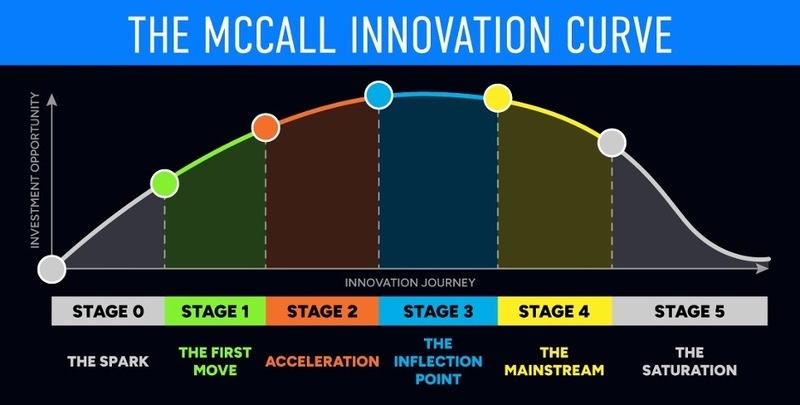
It also fits Stage 2: Acceleration on my McCall Innovation Curve: technologies are moving beyond laboratory concepts into flight tests, production, and serious military evaluation.
 |
For investors, KTOS offers exposure to the rise of autonomous combat aircraft, while DRS provides exposure to the sensors and electronics needed to defend against evolving threats. Neither is automatically a buy at any price. Defense procurement takes time, programs can change, and valuations matter.
But this week’s news offers something more meaningful than another futuristic prediction. We’re watching the next era of military technology take shape in real time, and the companies building its essential systems deserve a spot on our watchlists.
P.S. The feedback loop I described above doesn’t just play out on the battlefield. It moves markets, too. Conflict in the Middle East helped drive the energy spike behind the recent hotter-than-expected inflation report, and it’s one of six forces Bryan Bottarelli sees converging right now, along with the midterms, rising rates, and U.S. debt. He believes they’re setting up 90 days of peak volatility.
Bryan’s built a strategy to flip that chaos into potential overnight gains, and he’s laying out the whole plan today at 2 p.m. ET.
It’s free, and there’s still time to grab your seat. Click here to join.
